





Introduction: The Age of Disruption
We live in an age where technology is evolving at an exponential rate, fundamentally transforming the way we live, work, and interact with the world. From artificial intelligence (AI) to blockchain, 5G to virtual reality (VR), the rise of these cutting-edge technologies is reshaping industries, revolutionizing business models, and altering daily life. What was once considered futuristic is now being integrated into our homes, workplaces, and even our personal lives. In this blog, we will take a closer look at how some of the most impactful emerging technologies are driving change, the potential they hold for the future, and the challenges they present as we navigate this new technological landscape.
Artificial Intelligence: The Brain Behind the Revolution
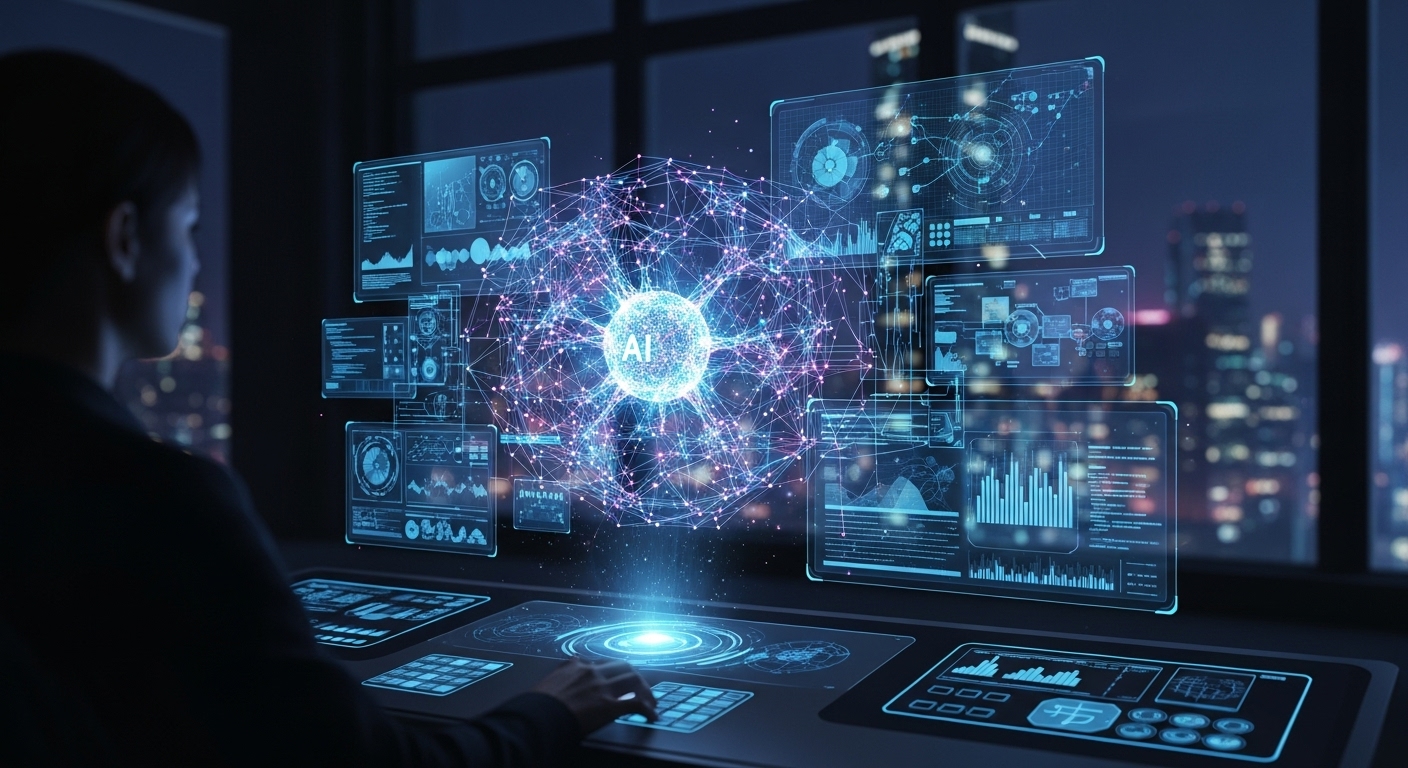
Artificial Intelligence, or AI, has been one of the most talked-about technologies in recent years, and for good reason. AI refers to the ability of machines to simulate human intelligence and learn from experience. This technology has the potential to revolutionize nearly every sector, from healthcare to finance, retail to entertainment.
One of the most notable applications of AI is in the realm of machine learning, where algorithms are designed to analyze large sets of data and make predictions or decisions based on that data. This ability to identify patterns and trends has made AI a game-changer for industries like healthcare. For example, AI-powered diagnostic tools can help doctors detect diseases such as cancer earlier than ever before, allowing for more effective treatment options. In finance, AI is being used to detect fraudulent transactions and assist in algorithmic trading, while in retail, AI enhances customer experiences by offering personalized recommendations.
But AI’s potential goes far beyond just improving efficiency and automating tasks. The true promise of AI lies in its ability to transform entire industries and change how we live our lives. Imagine a future where AI can autonomously drive our cars, make personalized health recommendations, or even write books and compose music. However, as AI continues to develop, it raises important ethical and societal questions about its impact on employment, privacy, and decision-making.
Blockchain Technology: Trust in a Decentralized World
Blockchain technology has garnered significant attention in recent years, primarily due to its association with cryptocurrencies like Bitcoin. However, blockchain’s potential extends far beyond digital currencies. At its core, blockchain is a decentralized and distributed ledger technology that securely records transactions across a network of computers.
One of the most significant advantages of blockchain is its ability to provide transparency and security without the need for intermediaries like banks or government institutions. Each transaction recorded on a blockchain is time-stamped and cannot be altered or tampered with, creating a permanent and verifiable record. This makes blockchain an ideal solution for industries that require secure, transparent transactions, such as supply chain management, voting systems, and contract execution.
In the supply chain industry, for example, blockchain can be used to track the journey of products from their origin to their destination, ensuring that goods are ethically sourced and reducing the risk of fraud. In the world of finance, blockchain is paving the way for faster, more secure cross-border payments, which could transform global trade. Beyond finance and logistics, blockchain also has the potential to disrupt industries like healthcare, where it could provide a secure way to store and share patient data.
Despite its many benefits, blockchain is not without challenges. The technology is still in its early stages, and widespread adoption requires overcoming issues such as scalability, energy consumption, and regulatory concerns. However, as blockchain continues to mature, it is expected to play a significant role in shaping the future of digital transactions and trust in an increasingly digital world.
5G Technology: Connecting Everything, Everywhere
5G technology, the fifth generation of wireless networking, is poised to revolutionize the way we connect to the internet and each other. With faster speeds, lower latency, and the ability to handle more connected devices, 5G has the potential to transform industries ranging from healthcare and manufacturing to entertainment and transportation.
One of the key advantages of 5G is its ability to deliver download speeds up to 100 times faster than the current 4G network. This means that data can be transmitted more quickly, enabling applications that require high bandwidth, such as streaming high-definition video, gaming, and virtual reality. For example, with 5G, users will be able to download entire movies in seconds and participate in lag-free, real-time online gaming.
In addition to faster speeds, 5G’s low latency—meaning the delay between sending and receiving data—makes it ideal for real-time applications. This is particularly important in sectors like healthcare, where telemedicine, remote surgeries, and real-time monitoring of patients can be made possible with 5G’s ultra-reliable connectivity. Similarly, 5G will be crucial in the development of autonomous vehicles, as self-driving cars will need to communicate with each other and with infrastructure in real time to ensure safety and efficiency.
Another area where 5G will have a profound impact is the Internet of Things (IoT). With 5G, the number of connected devices in homes, cities, and factories will increase exponentially, allowing for a smarter and more efficient world. Smart homes, smart cities, and connected factories will be able to operate more seamlessly and intelligently, improving everything from energy usage to traffic management.
While the potential of 5G is vast, the technology also faces challenges related to infrastructure, coverage, and security. As 5G networks are rolled out globally, it will take time to ensure that all regions are adequately covered and that security concerns, particularly regarding data privacy, are addressed.
Virtual and Augmented Reality: A New Dimension of Interaction
Virtual Reality (VR) and Augmented Reality (AR) are two immersive technologies that are rapidly transforming industries ranging from entertainment and gaming to education and healthcare. Both VR and AR have the potential to change the way we experience the world by blending the physical and digital realms.
Virtual reality immerses users in a completely digital environment, typically through the use of a VR headset. VR has become popular in the gaming industry, where it offers users an unparalleled level of immersion, allowing them to interact with virtual worlds in a highly realistic way. However, VR is also being used in other sectors, such as healthcare, where it is helping train surgeons and providing therapy for patients with mental health issues. VR can also be used to create immersive learning environments, allowing students to experience historical events or explore outer space without leaving the classroom.
On the other hand, augmented reality overlays digital information onto the real world. Popularized by applications like Pokémon Go, AR allows users to see virtual objects and information in the context of their physical surroundings. AR is being used in retail, where customers can try on clothes virtually or visualize how furniture will look in their homes before making a purchase. In healthcare, AR is helping surgeons visualize critical data during procedures, improving precision and reducing the risk of errors.
Both VR and AR are expected to play a major role in shaping the future of entertainment, education, and healthcare. As these technologies become more advanced and accessible, the line between the physical and digital worlds will continue to blur, offering exciting new opportunities for both consumers and businesses alike.
Quantum Computing: Unlocking the Power of the Universe
Quantum computing is one of the most exciting and mysterious fields of technology today. Unlike classical computers, which process information in binary form (0s and 1s), quantum computers leverage the principles of quantum mechanics to process data in more complex ways. Quantum bits, or qubits, can exist in multiple states simultaneously, allowing quantum computers to solve certain problems much faster than traditional computers.
While quantum computing is still in its infancy, it holds tremendous potential for industries such as cryptography, drug discovery, and optimization. For example, quantum computers could crack encryption codes that would take classical computers millions of years to break, potentially revolutionizing the field of cybersecurity. In healthcare, quantum computers could simulate molecular interactions, leading to the discovery of new drugs and treatments for diseases that currently have no cure.
Quantum computing also has applications in finance, logistics, and artificial intelligence, where its ability to process vast amounts of data and solve complex problems could lead to breakthroughs in machine learning, predictive analytics, and optimization algorithms. However, quantum computing is still in the experimental phase, and building practical, large-scale quantum computers presents significant technical challenges.
Conclusion: Embracing the Technological Future
The future of technology is both exciting and uncertain, with innovations like AI, blockchain, 5G, VR, and quantum computing poised to reshape every facet of our lives. As we move further into the 21st century, the integration of these technologies will continue to transform industries, create new opportunities, and bring about new challenges. The pace of technological change is accelerating, and it is up to individuals, businesses, and governments to navigate this new landscape responsibly and ethically.
As we embrace the possibilities of emerging technologies, we must also remain mindful of their potential risks and implications. Ensuring that these technologies are used in ways that benefit society as a whole, while addressing concerns such as privacy, security, and inequality, will be crucial in shaping a future where technology works for everyone.
With endless possibilities on the horizon, one thing is certain: the tech revolution is just beginning, and the best is yet to come.