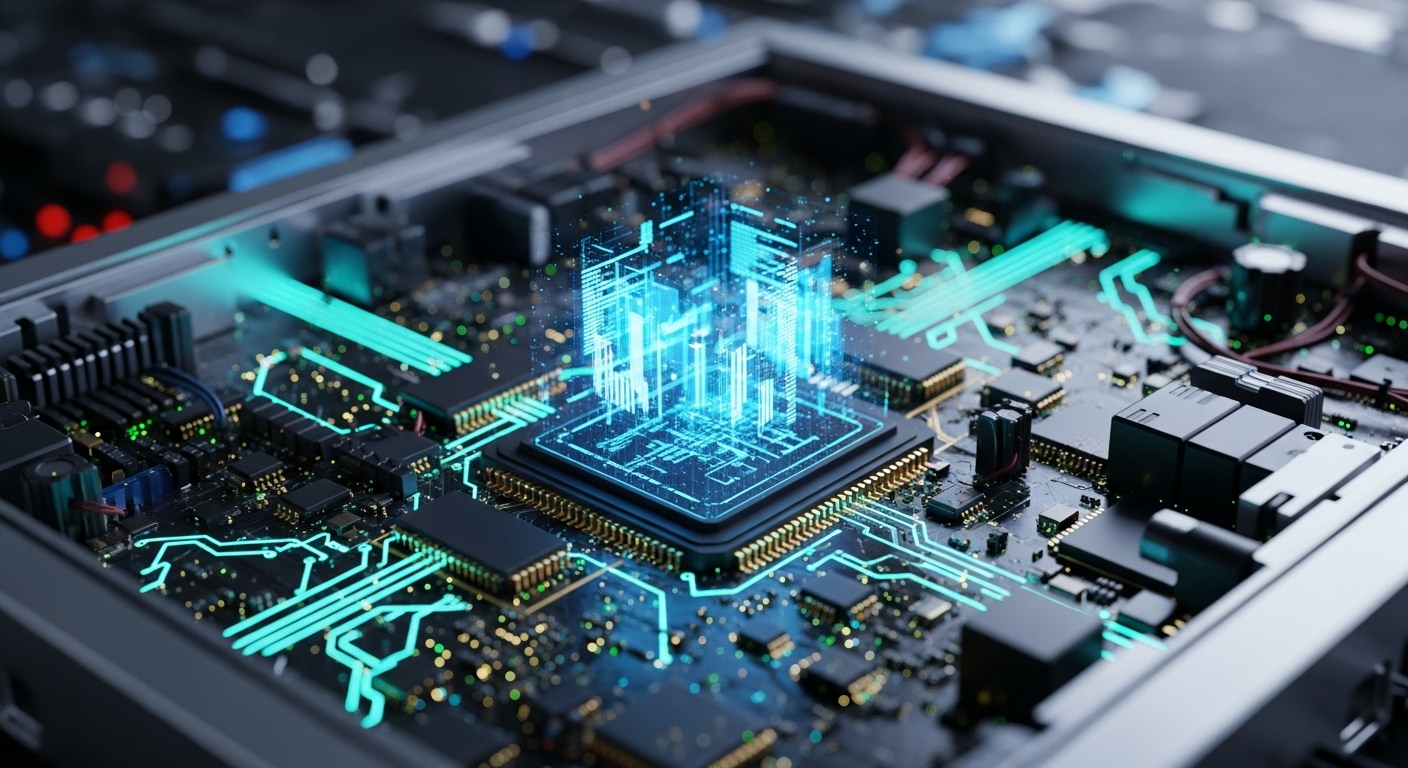






Quantum computing is one of the most exciting and transformative fields in modern technology. Though still in its early stages, quantum computing promises to solve problems that are beyond the capabilities of even the most powerful classical computers. From revolutionizing industries such as healthcare, finance, and cryptography to transforming the way we understand and interact with data, the future of quantum computing is filled with enormous potential. In this blog post, we will explore the concept of quantum computing, its applications, and the challenges and opportunities it presents as we move towards a quantum-powered future.
Understanding Quantum Computing
At its core, quantum computing is based on the principles of quantum mechanics, a branch of physics that describes the behavior of matter and energy at the smallest scales—atoms and subatomic particles. Unlike classical computers, which use bits to represent data as either 0 or 1, quantum computers use quantum bits, or qubits. Qubits can exist in a state of 0, 1, or both 0 and 1 simultaneously due to a phenomenon known as superposition.
This ability to exist in multiple states at once allows quantum computers to perform certain types of calculations much more efficiently than classical computers. Additionally, quantum computers leverage entanglement, another quantum property, where the state of one qubit is directly related to the state of another, even if they are far apart. This entanglement enables quantum computers to solve complex problems with an exponential speedup compared to their classical counterparts.
The Rise of Quantum Algorithms
Quantum algorithms are the key to unlocking the potential of quantum computing. These algorithms are specifically designed to take advantage of the unique properties of quantum mechanics, such as superposition and entanglement, to solve problems more efficiently.
One of the most well-known quantum algorithms is Shor’s algorithm, which can factor large numbers exponentially faster than the best-known classical algorithms. This has significant implications for the field of cryptography, particularly for widely used encryption methods that rely on the difficulty of factoring large numbers. Shor’s algorithm demonstrates that quantum computers could potentially break many of the encryption systems used today, which has led to the development of post-quantum cryptography to prepare for a quantum-safe future.
Another important quantum algorithm is Grover’s algorithm, which is designed to search through unsorted databases more efficiently. While it does not provide an exponential speedup like Shor’s algorithm, Grover’s algorithm offers a quadratic improvement, which can still be significant for certain applications, such as optimization problems.
Quantum algorithms are still being developed and refined, and researchers are continually discovering new ways in which quantum computers can outperform classical ones in specific areas. As quantum hardware continues to improve, so too will the algorithms designed to make the most of it.
Quantum Computing in Healthcare
One of the most promising applications of quantum computing is in the field of healthcare. Quantum computers have the potential to revolutionize drug discovery, personalized medicine, and medical research by simulating complex molecular structures and interactions with unprecedented speed and accuracy.
For instance, classical computers struggle to simulate the behavior of molecules in detail, particularly when it comes to large, complex molecules such as proteins. Quantum computers, however, can model these molecules more effectively by using quantum mechanics to simulate the interactions between particles at the atomic level. This could significantly accelerate the discovery of new drugs and treatments, potentially reducing the time and cost required for clinical trials.
Moreover, quantum computing could also play a key role in personalized medicine, which tailors medical treatments to individual patients based on their genetic makeup. By processing vast amounts of genetic data and analyzing complex biological systems, quantum computers could help identify the most effective treatments for specific individuals, leading to more precise and targeted therapies.
Quantum Computing in Cryptography and Cybersecurity
Cryptography and cybersecurity are critical areas where quantum computing is expected to have a profound impact. Many of the encryption methods used to secure sensitive data today, such as RSA encryption, rely on the fact that factoring large numbers is computationally difficult. However, with the advent of quantum computers, this assumption is no longer valid.
Shor’s algorithm, as mentioned earlier, can factor large numbers in polynomial time, rendering many classical encryption methods vulnerable to quantum attacks. This has led to significant research in developing quantum-resistant encryption algorithms, known as post-quantum cryptography. These algorithms are designed to be secure against both classical and quantum computers, ensuring that sensitive data remains protected in a quantum-powered world.
In addition to developing new encryption methods, quantum computers themselves could be used to enhance security. Quantum key distribution (QKD), for example, is a technique that uses the principles of quantum mechanics to create a secure communication channel. Any attempt to intercept or eavesdrop on the quantum communication would disrupt the system, alerting both parties to the potential threat. QKD could become a cornerstone of future cybersecurity, offering unbreakable encryption based on the laws of physics.
Quantum Computing in Finance
The finance industry stands to benefit greatly from the advances in quantum computing. Quantum computers have the potential to solve complex optimization problems that are common in finance, such as portfolio optimization, risk analysis, and asset pricing.
In portfolio optimization, for example, quantum computers could analyze vast amounts of data and identify the optimal allocation of assets to maximize returns while minimizing risk. This is a problem that classical computers struggle with when dealing with large datasets, but quantum computers could process these in a fraction of the time, allowing financial institutions to make faster and more informed decisions.
Quantum computing could also play a critical role in financial modeling and simulation. Classical models are limited by their ability to represent complex systems with many variables, such as the interconnectedness of financial markets. Quantum computers, however, can model these systems more accurately, leading to more precise predictions and better risk management strategies.
The Challenges of Quantum Computing
Despite the incredible potential of quantum computing, there are still significant challenges that need to be overcome before it can be widely adopted. One of the main challenges is the issue of quantum decoherence. Quantum systems are extremely sensitive to their environment, and small disturbances—such as temperature fluctuations or electromagnetic radiation—can cause qubits to lose their quantum state, a phenomenon known as decoherence. Researchers are working on ways to mitigate this problem, but achieving stable, error-free qubits remains a major hurdle.
Another challenge is the scalability of quantum computers. While small-scale quantum computers with a handful of qubits have been demonstrated, building large-scale quantum computers with thousands or millions of qubits is a difficult task. Researchers are exploring different approaches to scaling quantum computers, such as using superconducting qubits or trapped ions, but practical, large-scale quantum computers are still years, if not decades, away.
Finally, there is the challenge of quantum software and algorithms. While there are many promising quantum algorithms, the field is still in its infancy, and developing efficient algorithms for quantum hardware is a complex task. As quantum hardware continues to improve, there will be a need for new algorithms and software tools to harness the power of quantum computing fully.
The Road Ahead: Preparing for a Quantum Future
As we look towards the future, it is clear that quantum computing has the potential to revolutionize numerous industries and change the way we solve some of the world’s most complex problems. However, realizing this potential will require continued research and collaboration between academia, industry, and government. Quantum computers will not replace classical computers, but they will complement them by solving problems that are currently out of reach for traditional computing.
To prepare for a quantum-powered future, companies and organizations need to invest in quantum research, develop quantum-resistant encryption methods, and train the next generation of quantum scientists and engineers. The transition to a quantum economy will take time, but the groundwork being laid today will shape the future of technology for generations to come.
In conclusion, quantum computing is not just a distant possibility—it is becoming an increasingly tangible reality. The next decade will likely see significant breakthroughs in quantum hardware, algorithms, and applications, paving the way for a new era of innovation. As we stand on the brink of this quantum revolution, we must continue to embrace the opportunities it presents while carefully considering its challenges and ethical implications. The future of quantum computing is bright, and the possibilities are truly limitless.