





Technology is advancing at an unprecedented rate, and its impact is being felt across all aspects of our lives. From the way we communicate, work, and learn, to how we interact with our environment, technology is at the forefront of shaping our future. In this blog post, we’ll explore some of the most exciting innovations on the horizon and their potential to transform the world as we know it. Let’s dive into the cutting-edge tech that’s redefining the future and what it means for society, business, and individuals.
The Rise of Artificial Intelligence and Machine Learning
Artificial Intelligence (AI) and Machine Learning (ML) have been major buzzwords in the tech industry for years. However, what was once considered a futuristic concept is now becoming a reality that’s already influencing our daily lives. AI is no longer just a tool for data analysis or problem-solving; it’s becoming a key enabler of smarter, more efficient systems across every sector.
One of the most significant advances in AI is the development of Natural Language Processing (NLP). NLP allows machines to understand and generate human language, making communication with technology more intuitive. This is evident in products like Siri, Google Assistant, and advanced chatbots that are capable of having more natural, human-like conversations. As NLP continues to improve, AI assistants will become even more adept at managing tasks, providing personalized experiences, and supporting decision-making processes.
Moreover, AI is transforming industries such as healthcare, where machine learning algorithms are used to analyze medical data and make predictions that can help doctors diagnose and treat illnesses more effectively. The potential for AI to accelerate breakthroughs in medicine, as well as enhance the efficiency of supply chains, logistics, and manufacturing, is immense.
Quantum Computing: The Next Frontier in Computational Power
When we think about the future of computing, quantum computers stand at the forefront of innovation. Quantum computing has the potential to revolutionize the way we solve complex problems. Unlike classical computers, which process data in bits (0s and 1s), quantum computers use qubits, which can exist in multiple states simultaneously. This unique property allows quantum computers to perform calculations that are currently impossible for traditional machines.
The implications of quantum computing are vast, particularly in fields like cryptography, drug discovery, and optimization problems. In cryptography, for instance, quantum computers could potentially break current encryption techniques that keep our data secure, but they could also lead to the development of much stronger encryption systems. In healthcare, quantum computing could drastically accelerate the process of drug discovery by simulating molecular structures far more efficiently than today’s computers.
However, it’s important to note that quantum computing is still in its infancy. Researchers are working on solving issues like error rates and stability, but in the coming decades, quantum computers could unlock new possibilities that we can’t even begin to imagine today.
The Internet of Things (IoT): Connecting the World Around Us
The Internet of Things (IoT) refers to the network of physical devices, vehicles, appliances, and other items that are embedded with sensors and software, enabling them to connect and exchange data. From smart thermostats and refrigerators to wearable fitness trackers and connected cars, IoT devices are increasingly becoming a part of everyday life.
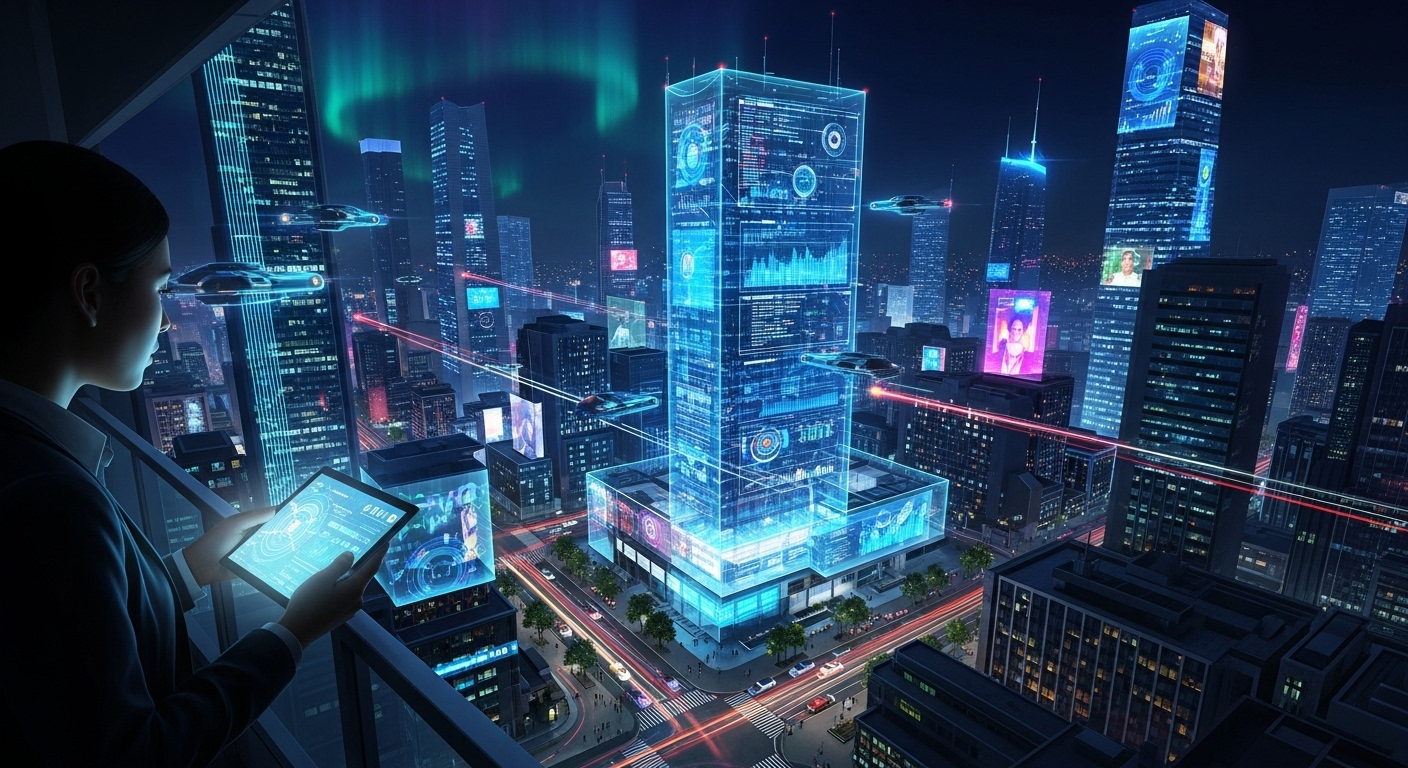
The potential of IoT is vast, particularly in the realm of smart cities. By connecting various systems such as traffic management, energy distribution, and public services, IoT can make urban environments more efficient, sustainable, and livable. For instance, IoT sensors can optimize traffic flow by monitoring real-time traffic data, reducing congestion, and minimizing fuel consumption. Similarly, IoT-enabled smart grids can monitor electricity usage, reduce energy waste, and even predict demand patterns to ensure a more sustainable future.
For consumers, IoT provides greater convenience and automation. Smart homes, powered by IoT devices, allow users to control everything from lights and appliances to security systems with just a voice command or a smartphone app. The seamless integration of IoT in our daily routines will continue to evolve as new technologies emerge, making our homes, workplaces, and cities more intelligent and responsive.
Blockchain Technology: Beyond Cryptocurrency
Blockchain technology, initially known for its association with cryptocurrencies like Bitcoin, is gaining traction as a transformative innovation with far-reaching applications beyond digital currency. At its core, blockchain is a decentralized, distributed ledger that records transactions across multiple computers, ensuring security and transparency.
One of the most significant advantages of blockchain is its ability to facilitate secure and transparent transactions without the need for a central authority, such as a bank. This has the potential to revolutionize industries like finance, supply chain management, and even voting systems. For example, in supply chains, blockchain can be used to track the provenance of goods, ensuring that products are ethically sourced and not counterfeit.
Additionally, blockchain is poised to change the way we handle digital identity and personal data. With growing concerns over data privacy and security, blockchain offers a solution by allowing individuals to control their own data and share it selectively. This could lead to more secure online transactions, enhanced privacy, and greater trust in digital interactions.
5G and the Evolution of Connectivity
Connectivity is at the heart of nearly every technological innovation, and the rollout of 5G networks promises to take this to the next level. 5G, the fifth generation of wireless technology, offers faster speeds, lower latency, and greater capacity than current 4G networks. This will enable more devices to connect simultaneously without compromising performance.
The impact of 5G will be felt in various industries, from healthcare to entertainment and beyond. For example, 5G’s low latency and high-speed capabilities will make remote surgeries and telemedicine more viable, allowing doctors to perform medical procedures on patients in real-time, even if they are located thousands of miles away.
In the entertainment industry, 5G will pave the way for immersive experiences such as augmented reality (AR) and virtual reality (VR) to become mainstream. These technologies require high data bandwidth and low latency, both of which are facilitated by 5G. The next generation of gaming, for example, will be deeply enhanced by 5G’s ability to stream high-quality graphics without lag, providing a truly immersive experience.
Autonomous Vehicles: Revolutionizing Transportation
Self-driving cars have been a topic of fascination for years, and they’re no longer just a dream of the future. Autonomous vehicles (AVs) are already being tested on roads around the world, with companies like Tesla, Waymo, and Uber making significant strides in developing this technology. While fully autonomous cars are not yet commonplace, the advancements being made in sensors, AI, and machine learning are bringing us closer to a future where human drivers may be a thing of the past.
The potential benefits of autonomous vehicles are profound. For one, they have the ability to reduce traffic accidents caused by human error, which is responsible for the majority of accidents on the road today. Autonomous vehicles can also improve traffic flow, reduce fuel consumption, and provide greater mobility for elderly and disabled individuals who may not be able to drive.
Furthermore, AVs are expected to disrupt industries such as logistics and delivery services. With the rise of autonomous trucks and drones, goods can be transported more efficiently and at a lower cost. The integration of AVs into the transportation system is likely to result in significant changes to urban planning, public transport, and the way we think about mobility in general.
The Evolution of Augmented Reality and Virtual Reality
Augmented Reality (AR) and Virtual Reality (VR) are two technologies that have the potential to redefine how we experience the digital world. While VR immerses users in a completely virtual environment, AR overlays digital information onto the physical world, enhancing real-life experiences with interactive elements.
In the realm of entertainment, AR and VR are creating new ways for consumers to interact with content. VR gaming has already made a significant impact, with headsets like the Oculus Rift providing players with an immersive gaming experience. AR, on the other hand, has found widespread adoption in mobile apps, such as Pokémon Go, which lets players interact with virtual characters in the real world.
Beyond gaming, AR and VR are revolutionizing industries like education, healthcare, and retail. In education, VR can transport students to different historical eras or faraway locations, offering immersive learning experiences that were previously impossible. In healthcare, VR is being used for everything from surgical training to therapy for PTSD and anxiety disorders.
As AR and VR technologies continue to evolve, the possibilities for their application will only grow, ushering in a new era of interactive, immersive experiences.
Conclusion: A Technological Revolution in the Making
The rapid pace of technological advancements is reshaping our world in ways we could have only dreamed of just a few decades ago. From AI and quantum computing to IoT and blockchain, these innovations are not only transforming industries but are also fundamentally altering how we live, work, and interact with each other.
As we look to the future, it’s clear that technology will continue to play a central role in solving some of society’s most pressing challenges, from climate change and healthcare to education and security. However, as we embrace these advancements, we must also consider the ethical, social, and economic implications that come with them.
The key to navigating this technological revolution will be balancing progress with responsibility. By ensuring that technology is developed and implemented in ways that benefit society as a whole, we can harness its full potential to create a better, more connected, and sustainable world.
In the end, the future of technology is not just about the devices we use or the algorithms that power them. It’s about the ways in which these innovations will shape our lives, our societies, and our global community in the years to come. The possibilities are endless—one thing is certain: the future is going to be exciting.