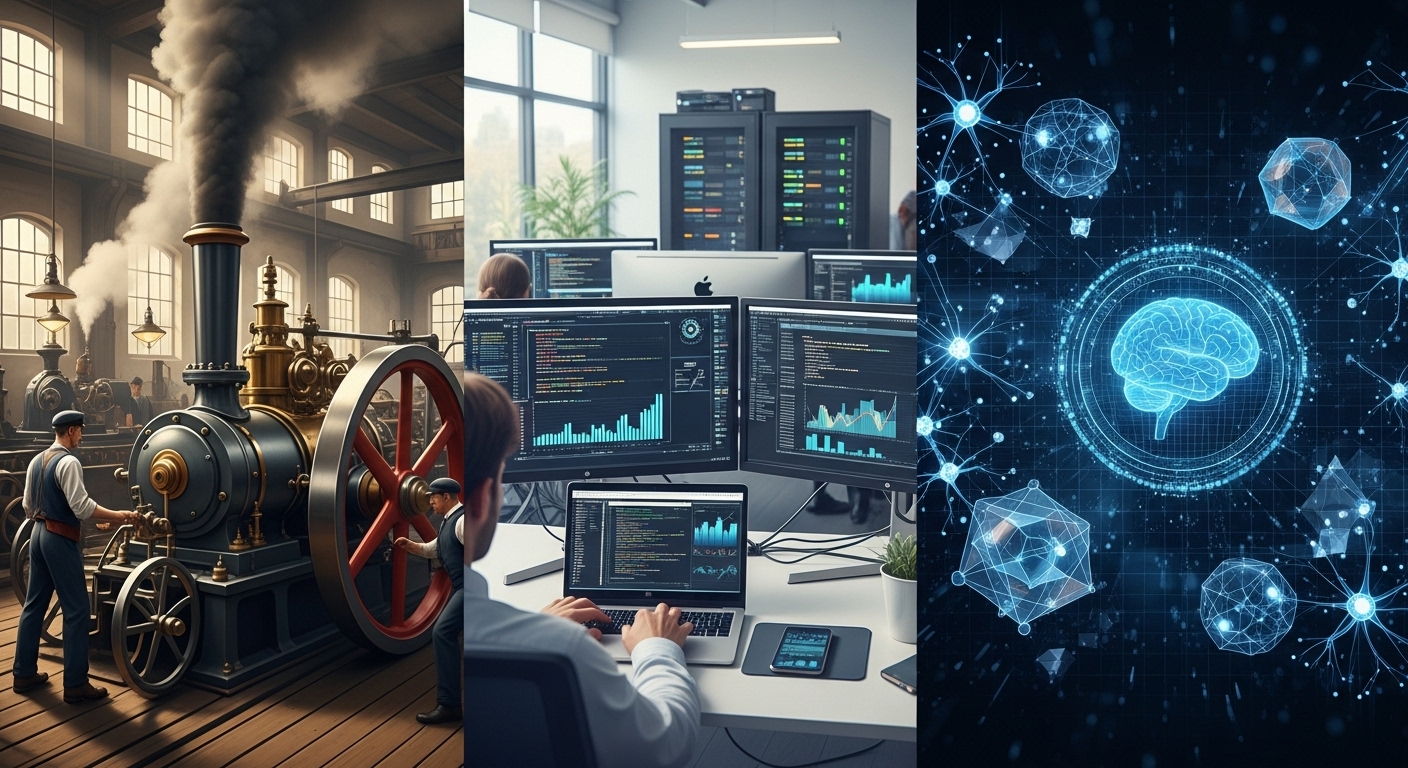






Technology has become the cornerstone of modern life, shaping the way we work, communicate, and experience the world around us. From the smartphones in our pockets to the artificial intelligence (AI) systems powering industries, technology continues to advance at a rapid pace, altering almost every aspect of human existence. This blog post will explore the profound impact of technology on our society, the challenges it presents, and the incredible opportunities it holds for the future. As we stand at the cusp of new technological revolutions, it’s clear that the future of technology will not only continue to change the way we live but will also redefine our understanding of what is possible.
The Rise of Artificial Intelligence: Rewriting the Rules of Innovation
Artificial intelligence (AI) has long been a topic of science fiction, but in recent years, it has evolved into a powerful tool with far-reaching applications. From self-driving cars to AI-powered medical diagnoses, AI is already reshaping industries and improving our daily lives in ways we never thought possible.
The promise of AI lies in its ability to process vast amounts of data and identify patterns that humans might miss. This has opened up new frontiers in industries like healthcare, finance, and transportation. For example, AI-powered algorithms are revolutionizing the field of medicine, helping doctors detect diseases earlier and more accurately. In finance, AI systems are used to predict market trends and make real-time decisions that were once solely in the hands of human analysts.
However, as AI technology continues to evolve, it also raises important questions about the future of work. Many experts worry that AI and automation could lead to widespread job displacement, as machines are capable of performing tasks traditionally done by humans. This fear of obsolescence has sparked debates about how to balance the benefits of AI with the need to ensure economic security for workers. The key challenge for society will be to ensure that the rise of AI leads to a future where people and machines coexist, creating new opportunities rather than taking away existing ones.
The Internet of Things (IoT): Connecting Everything, Everywhere
The Internet of Things (IoT) is a concept that refers to the interconnection of everyday objects via the internet, enabling them to send and receive data. This network of connected devices has the potential to transform industries, cities, and homes, creating a smarter, more efficient world.
In smart homes, IoT devices like thermostats, security cameras, and refrigerators are already making life easier by providing remote control and automation. Imagine waking up to a perfectly warmed house, your coffee machine already brewing, and your car’s engine warming up—all thanks to IoT. These small conveniences are just the beginning; the full potential of IoT lies in its ability to optimize entire systems.
In cities, IoT can be used to manage traffic flow, reduce energy consumption, and enhance public safety. For example, smart traffic lights can adjust their timing based on real-time traffic conditions, reducing congestion and emissions. In agriculture, IoT devices can monitor soil moisture levels and weather patterns, helping farmers optimize irrigation and reduce water waste.
Despite the vast benefits, IoT also brings challenges. The sheer volume of connected devices raises concerns about data privacy and security. As more devices collect and transmit data, there is an increased risk of cyberattacks that could compromise sensitive information. Moreover, the interoperability of different IoT devices from various manufacturers remains a significant hurdle. Ensuring that these devices work seamlessly together will be crucial for realizing the full potential of the IoT ecosystem.
Blockchain: The Technology Behind Cryptocurrency and Beyond
Blockchain technology, which underpins cryptocurrencies like Bitcoin and Ethereum, has garnered significant attention in recent years. At its core, blockchain is a decentralized digital ledger that records transactions across multiple computers in a secure, transparent, and immutable way.
Although initially associated with cryptocurrencies, blockchain has far-reaching applications beyond finance. In supply chain management, blockchain can be used to track the journey of products from raw materials to the final consumer, ensuring transparency and reducing fraud. In healthcare, it could be used to securely store patient records, giving individuals more control over their own health data and improving the efficiency of medical research.
Blockchain’s decentralized nature means that it does not rely on a central authority, such as a bank or government, to validate transactions. This has significant implications for the future of digital currencies and financial systems, as it could lead to more secure, transparent, and accessible financial transactions. However, the technology is still in its early stages, and challenges such as scalability, energy consumption, and regulatory issues must be addressed before blockchain can reach its full potential.
Virtual Reality (VR) and Augmented Reality (AR): Redefining Human Experience
Virtual Reality (VR) and Augmented Reality (AR) are technologies that allow users to experience and interact with digital environments in new and immersive ways. While VR creates fully simulated environments, AR overlays digital elements onto the real world, enhancing the user’s perception of their surroundings.
The potential applications of VR and AR are vast, ranging from entertainment to education and healthcare. In entertainment, VR is already revolutionizing gaming, providing players with fully immersive worlds that are far beyond what traditional gaming consoles can offer. In education, VR can transport students to historical events, distant planets, or microscopic worlds, making learning more engaging and interactive.
In healthcare, VR is being used for pain management, therapy, and surgical training. AR, on the other hand, has applications in fields like retail, where customers can try on clothes virtually, or in manufacturing, where workers can access real-time information and instructions through AR glasses.
The widespread adoption of VR and AR will depend on several factors, including the cost of devices, content availability, and the development of user-friendly interfaces. As the technology continues to evolve, we are likely to see more industries embrace these immersive experiences, changing the way we work, learn, and entertain ourselves.
5G and the Future of Connectivity: Speed, Efficiency, and Possibilities
The rollout of 5G networks represents a major leap forward in the world of wireless communication. With speeds up to 100 times faster than current 4G networks, 5G promises to transform everything from mobile browsing to autonomous vehicles and smart cities.
One of the most exciting applications of 5G is its potential to enable the widespread adoption of IoT devices. The increased bandwidth and low latency of 5G will allow billions of devices to communicate with each other in real-time, unlocking new possibilities in areas like healthcare, logistics, and entertainment. For example, autonomous vehicles will require fast and reliable communication with other vehicles and infrastructure to navigate safely. 5G will make this possible by enabling instant data transfer between vehicles, improving safety and efficiency on the roads.
Moreover, 5G will enhance the experience of virtual reality (VR) and augmented reality (AR), which rely on real-time data processing. With 5G, users will be able to enjoy high-quality, lag-free VR and AR experiences, making them more practical for applications like gaming, remote work, and education.
However, the widespread deployment of 5G faces several challenges, including the need for new infrastructure, regulatory hurdles, and concerns over health effects. Despite these obstacles, 5G is expected to become a cornerstone of future technological innovations.
The Ethics of Technology: Balancing Innovation with Responsibility
As technology continues to evolve, it is essential to consider the ethical implications of new innovations. Advances in AI, biotechnology, and data collection are raising important questions about privacy, security, and the role of technology in society.
For example, the growing use of biometric data—such as facial recognition—has sparked debates over surveillance and personal freedom. While these technologies can improve security, they also raise concerns about privacy violations and the potential for misuse by governments or corporations.
Similarly, the development of genetic editing technologies like CRISPR holds the promise of curing genetic diseases, but it also raises questions about the ethics of altering the human genome. Who decides what constitutes a “desirable” genetic trait? What are the long-term consequences of genetic modifications?
As we continue to develop and deploy new technologies, it will be crucial to establish ethical frameworks and regulations that balance innovation with responsibility. Ensuring that technology is used for the greater good will require collaboration between policymakers, technologists, and society as a whole.
Conclusion: A Future Shaped by Technology
The future of technology holds immense promise. As artificial intelligence, IoT, blockchain, VR/AR, 5G, and other innovations continue to evolve, they will reshape industries, societies, and everyday life. The opportunities are vast, but so are the challenges. The key to harnessing the full potential of technology lies in ensuring that its benefits are accessible to all while addressing the ethical and societal implications that come with it.
Ultimately, technology is a tool—a powerful tool that, when used wisely, can unlock new possibilities, solve pressing problems, and improve lives. As we look ahead, we must strive to ensure that our technological advancements align with our values, creating a future where technology serves humanity, rather than the other way around.