




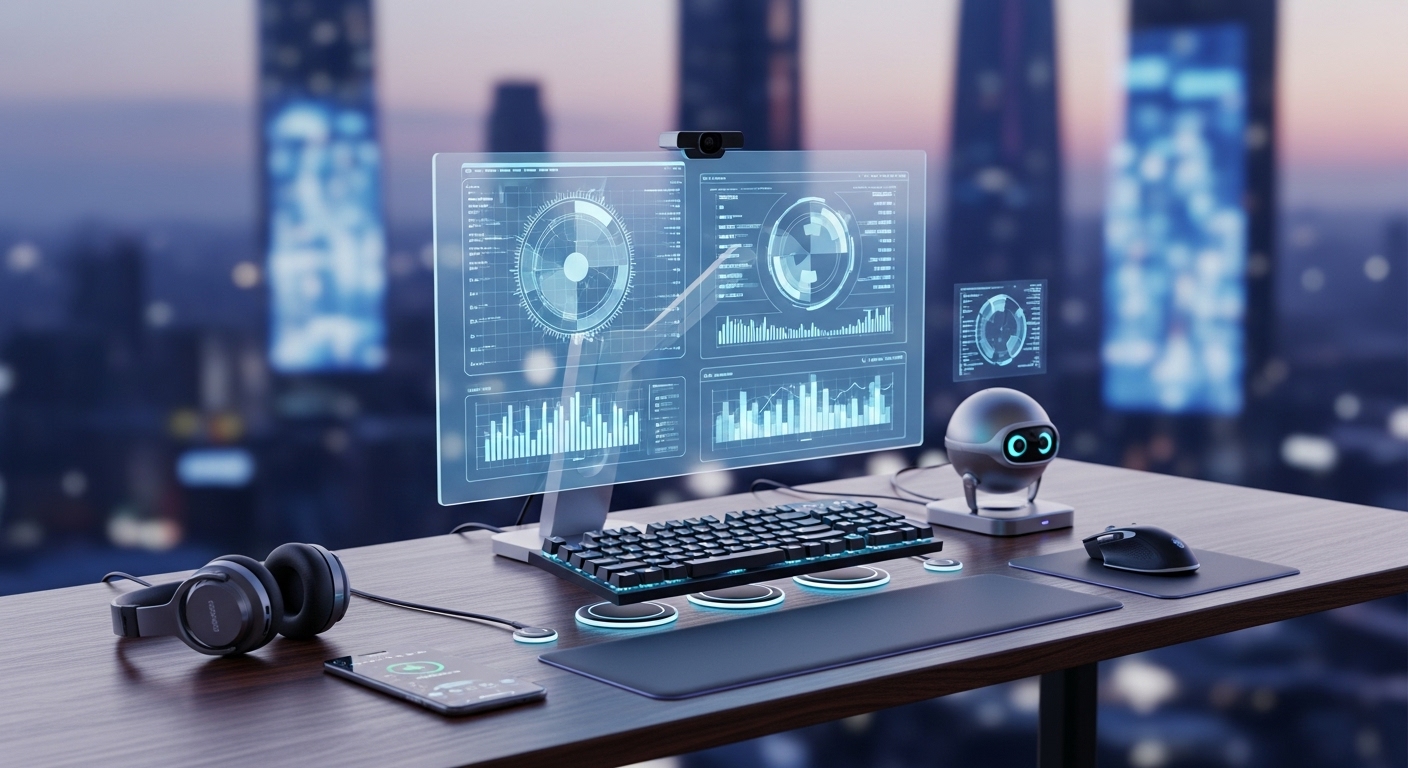
Introduction: The Silent Power of Modern Technology
Technology has always been a force that shapes human progress, but what we are witnessing today is not merely advancement—it is transformation. From the way we communicate to how we learn, work, and even think, technology is weaving itself into every aspect of daily life. Yet, much of this revolution happens quietly, without fanfare or spectacle. The invisible algorithms guiding our searches, the sensors monitoring our health, and the artificial intelligence predicting our needs are all part of a larger story—the story of how technology is silently redefining the essence of modern civilization.
The Digital Ecosystem: A World Within Our Devices
In the past, technology was a visible tool—machines, computers, and gadgets that required human control. Today, it operates in the background, often unnoticed but constantly active. Our smartphones, for instance, are not just communication devices; they are personal assistants, navigation systems, entertainment centers, and health monitors, all wrapped into a single unit. The digital ecosystem connects not only people but also objects, creating what experts call the Internet of Things. This interconnected web allows our devices to share information and make intelligent decisions, from regulating room temperatures to predicting maintenance needs in industrial machines.
What makes this ecosystem fascinating is its invisibility. We rarely notice the tiny sensors, microchips, and background processes that make our daily conveniences possible. The modern home, car, and workplace all rely on this silent network, making our lives more efficient while also reshaping how we perceive comfort, productivity, and control.
Artificial Intelligence: The Brain of the New Era
Artificial Intelligence, or AI, stands at the center of this invisible revolution. No longer confined to science fiction, AI now powers voice assistants, recommendation systems, chatbots, and even creative tools. Its ability to learn, adapt, and predict makes it one of the most transformative forces in modern technology.
AI is quietly changing industries across the globe. In healthcare, it helps detect diseases faster than human doctors. In finance, it predicts market trends with incredible accuracy. In education, it personalizes learning experiences for students. What makes AI truly remarkable is not just what it does, but how seamlessly it integrates into systems we already use. It works behind the scenes, constantly analyzing data and refining its intelligence, while users experience the results as effortless convenience.
However, AI also raises important ethical and societal questions. As it becomes more advanced, concerns about privacy, bias, and job displacement continue to grow. Balancing innovation with responsibility is becoming one of the defining challenges of our time.
Automation and the Future of Work
Technology’s influence on the workplace is profound and unavoidable. Automation, powered by AI and robotics, is changing how industries function. Repetitive and manual tasks are being replaced by machines that never tire and rarely err. While this transformation boosts efficiency and reduces costs, it also reshapes the job market, requiring workers to adapt, learn new skills, and embrace lifelong learning.
The future of work will likely be a partnership between humans and machines. Instead of replacing humans entirely, technology is expected to enhance human capabilities. For example, digital tools allow professionals to analyze data faster, collaborate remotely, and make better decisions. The rise of remote work and digital offices during recent years has shown that technology can create flexibility without compromising productivity. The modern worker is no longer tied to a desk or office but connected to a global digital workspace.
Smart Living: Technology in Our Homes
The concept of a “smart home” has transitioned from luxury to mainstream reality. Voice-controlled assistants, automated lighting, intelligent security systems, and energy-efficient devices have become part of everyday living. These technologies not only offer convenience but also contribute to sustainability by optimizing energy usage.
Smart homes are evolving to understand user preferences. Devices learn habits, predict needs, and even communicate with one another. A smart thermostat adjusts the temperature before you wake up, while your coffee machine starts brewing automatically. This seamless interaction between devices creates a personalized living experience that once seemed futuristic.
The ultimate goal of smart living is to simplify life without conscious effort. While it may appear that we are controlling technology, in truth, technology is beginning to anticipate our actions, blurring the line between human intention and machine response.
The Rise of Data: The New Oil of the Digital Age
Data has become one of the most valuable resources of our time. Every digital interaction, from a social media post to an online purchase, generates data that can be analyzed, interpreted, and monetized. Businesses rely on data analytics to understand consumer behavior, improve services, and predict future trends. Governments use data for planning, healthcare, and public safety.
However, this explosion of data also brings challenges related to privacy and security. The question of who owns and controls data is central to the ethics of modern technology. While data-driven decisions lead to greater efficiency, they also create potential vulnerabilities. Cybersecurity has therefore become one of the most critical fields in the tech industry, protecting the digital foundations upon which modern society relies.
Virtual and Augmented Reality: Redefining Human Experience
Virtual Reality (VR) and Augmented Reality (AR) are not just entertainment tools—they are transforming how we experience the world. VR immerses users in completely digital environments, while AR overlays digital information onto the physical world. These technologies are finding applications in education, medicine, architecture, and tourism.
Imagine a medical student practicing surgery in a virtual environment, an architect walking clients through a digital model of a building, or a traveler exploring historical landmarks through AR glasses. These experiences redefine how we learn, explore, and interact, bridging the gap between imagination and reality.
As these technologies evolve, they are expected to merge with AI, creating more realistic and responsive experiences that adapt to user behavior in real time.
Sustainability Through Innovation: Green Technology’s Role
While technology is often blamed for environmental harm, it also holds the key to sustainability. Green technology focuses on reducing waste, conserving energy, and promoting renewable resources. Innovations such as electric vehicles, smart grids, and biodegradable materials are part of a global effort to create a cleaner, more sustainable future.
The use of AI in environmental monitoring helps predict natural disasters, optimize farming practices, and manage resources efficiently. Renewable energy solutions powered by advanced algorithms ensure better energy distribution and consumption. In this sense, technology is not just a tool for progress but also a solution for survival.
The Human Side of Technology
Despite its complexity, the ultimate purpose of technology is to serve humanity. It connects families separated by distance, gives voice to marginalized communities, and empowers individuals through access to information and opportunity. Yet, this connection comes with a paradox: as we become more digitally connected, some feel more emotionally isolated.
The overuse of technology can lead to dependency and reduced real-world interaction. Therefore, finding balance is crucial. Technology should enhance human relationships, not replace them. The future lies in creating systems that foster empathy, understanding, and genuine human connection alongside innovation.
The Next Frontier: What Lies Ahead
The next decade will witness advancements that today seem almost unimaginable. Quantum computing promises to solve problems that traditional computers cannot. Biotechnology will integrate with digital systems to create personalized medicine. Space technology will expand human presence beyond Earth, while AI will continue to evolve toward greater autonomy and intelligence.
However, the success of these innovations will depend on how responsibly they are developed and deployed. Technology must be guided by ethics, inclusivity, and sustainability. The invisible revolution is powerful, but it must remain aligned with human values to ensure a better future for all.
Conclusion: Embracing the Invisible Revolution
Technology’s most profound impact is not in its visible devices or flashy inventions, but in the quiet ways it changes how we live, think, and connect. The invisible revolution happening around us is shaping the very foundation of human experience. From smart homes to artificial intelligence, from data analytics to green innovation, every advancement carries the potential to make life more intelligent, efficient, and sustainable.
As we move forward, the challenge is not merely to create new technology but to use it wisely. The future will belong to those who understand that progress is not just about innovation—it is about integration, ethics, and human-centered design. The world is being rewritten in code, powered by invisible algorithms and silent machines. And in that quiet transformation lies the story of our time: the rise of a connected, intelligent, and endlessly evolving world.