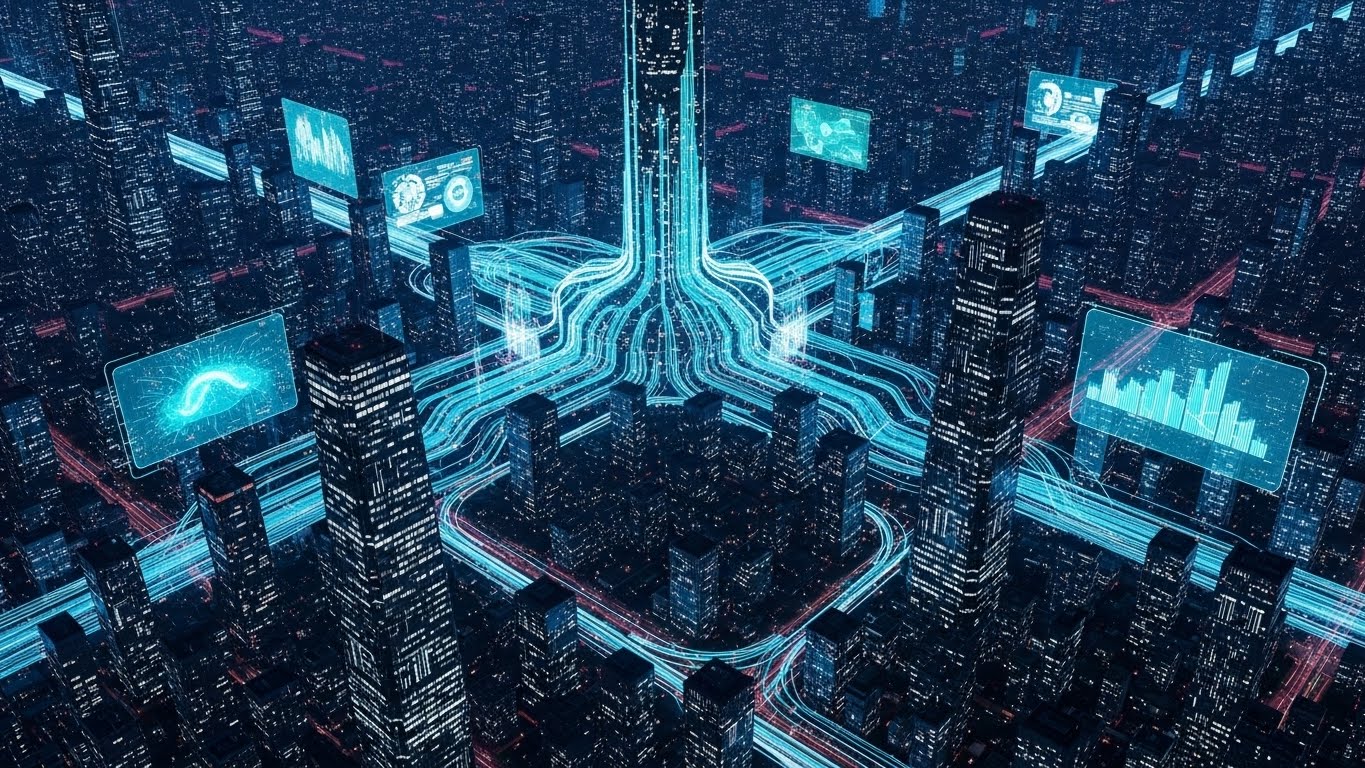






The world is in the midst of a profound technological transformation. Every aspect of our daily lives—from how we communicate and work to how we manage our health and entertain ourselves—is being reshaped by rapidly advancing technologies. While the digital revolution has already fundamentally changed how we interact with the world, the future promises even more groundbreaking developments. The rise of artificial intelligence, blockchain, quantum computing, augmented reality, and renewable energy technologies is poised to define the next era of innovation. As we navigate this new landscape, understanding the forces driving these changes and their potential impact on society is essential.
The Digital Transformation: A New Era of Connectivity
In the last few decades, the internet has radically transformed nearly every industry. The way we communicate, access information, conduct business, and entertain ourselves has been completely altered by digital technologies. The growth of the internet, coupled with the rise of smartphones and cloud computing, has enabled the world to become more interconnected than ever before. As a result, new business models have emerged, allowing companies to reach global audiences in ways that were once impossible.
The proliferation of high-speed internet has made information accessible to billions of people around the world. Cloud computing, which allows businesses to store data and run applications on remote servers, has revolutionized industries by providing cost-effective and scalable solutions for everything from file storage to running complex software programs. This shift has led to the creation of new digital ecosystems, where small businesses and startups can compete alongside global giants like Amazon, Google, and Microsoft.
One of the most significant changes brought about by the digital age is the rise of the gig economy. Digital platforms such as Uber, Airbnb, and freelance job boards have created new ways for people to earn a living, offering more flexibility and independence. These platforms have disrupted traditional industries, allowing individuals to work from home or pursue multiple jobs simultaneously.
At the same time, the widespread use of smartphones and apps has made it easier than ever to access services, stay connected with friends and family, and entertain ourselves. Social media platforms like Facebook, Instagram, and Twitter have transformed how we interact, share information, and form relationships. They have also opened up new avenues for marketing and branding, enabling businesses to reach their target audience in real time and on a personal level.
Artificial Intelligence: The Brain Behind the Future
Artificial intelligence (AI) is arguably the most powerful and transformative technology of the 21st century. It refers to the ability of machines and software to perform tasks that typically require human intelligence, such as learning, reasoning, problem-solving, and language understanding. AI is already having a significant impact on industries ranging from healthcare and finance to transportation and entertainment.
In healthcare, AI is enabling more accurate diagnoses, personalized treatments, and improved patient outcomes. Machine learning algorithms can analyze medical data—such as imaging scans, genetic information, and patient histories—much faster and more accurately than a human doctor. AI-powered tools are also being used to predict the likelihood of certain diseases or conditions, allowing for earlier intervention and better preventive care.
In the world of finance, AI is helping institutions manage risk, detect fraud, and make smarter investment decisions. Machine learning models can analyze vast amounts of financial data and identify patterns that humans might miss. This has led to the rise of algorithmic trading, where AI systems make real-time decisions about buying and selling stocks based on market trends.
The transportation sector is another area where AI is making a huge impact. Self-driving cars, which use AI to navigate and make decisions on the road, are expected to revolutionize the way we travel. While fully autonomous vehicles are still in the testing phase, several companies are already developing AI-powered systems that can drive cars, trucks, and even delivery drones with minimal human intervention. In addition to improving road safety and reducing traffic congestion, self-driving cars could significantly reduce the cost of transportation.
Despite its many benefits, AI also poses certain challenges. One of the most pressing concerns is the potential for job displacement. As AI systems become more capable of performing tasks traditionally done by humans, there is growing anxiety about the future of work. While AI is expected to create new job opportunities in fields like robotics and data analysis, many low-wage and repetitive jobs may be at risk. Policymakers will need to address these challenges to ensure a smooth transition into a more automated workforce.
Blockchain Technology: Beyond Cryptocurrency
Blockchain technology, originally developed as the underlying infrastructure for cryptocurrencies like Bitcoin, has the potential to revolutionize a wide range of industries. At its core, blockchain is a decentralized and secure ledger system that allows for transparent and tamper-proof record-keeping. Each transaction or data entry is recorded in a “block,” which is then linked to the previous one, forming a chain. Once recorded, these blocks cannot be altered, ensuring the integrity of the data.
While blockchain’s most famous application is in cryptocurrencies, its potential extends far beyond digital currencies. In supply chain management, for example, blockchain can provide real-time tracking of goods, ensuring transparency and reducing fraud. By using blockchain to track every step of the supply chain, businesses can guarantee that products are ethically sourced and that they meet quality standards.
In the world of finance, blockchain is being used to streamline payments and reduce transaction costs. Traditional financial institutions rely on intermediaries to facilitate transactions, which can be slow and expensive. Blockchain technology eliminates the need for intermediaries by enabling direct peer-to-peer transactions. This has the potential to make cross-border payments faster, cheaper, and more secure.
Blockchain is also being explored in fields like healthcare, where it could be used to securely store and share patient data. With the rise of digital health records, ensuring the privacy and security of medical data is becoming increasingly important. Blockchain could provide a secure and transparent way to store and access patient records, reducing the risk of data breaches and ensuring that sensitive information is only shared with authorized parties.
While blockchain has enormous potential, it is not without its challenges. One of the biggest obstacles to widespread adoption is scalability. As more transactions are added to a blockchain, the system can become slower and more resource-intensive. Additionally, blockchain networks are often criticized for their energy consumption, particularly in the case of proof-of-work systems used by cryptocurrencies like Bitcoin. However, new consensus mechanisms, such as proof-of-stake, are being developed to address these issues.
Quantum Computing: Unlocking Unimaginable Power
Quantum computing is an emerging field that promises to radically change the way we process information. Traditional computers rely on binary code, using bits that can be either 0 or 1 to represent data. Quantum computers, on the other hand, use quantum bits, or qubits, which can exist in multiple states simultaneously. This ability to perform complex calculations at unprecedented speeds makes quantum computers potentially far more powerful than classical computers.
The implications of quantum computing are vast. In fields like cryptography, quantum computers could break traditional encryption methods, forcing a complete overhaul of how we secure sensitive data. While this may sound alarming, it could also lead to the development of more secure encryption techniques, based on quantum principles, that are nearly impossible to hack.
In healthcare, quantum computing could accelerate drug discovery by simulating molecular interactions at a level of detail that is currently impossible with classical computers. This could lead to the development of new treatments for diseases like cancer and Alzheimer’s. Similarly, quantum simulations could help scientists better understand complex biological systems, opening up new possibilities for personalized medicine.
Despite its enormous potential, quantum computing is still in its infancy. Building a practical, scalable quantum computer is an immense technical challenge. The qubits used in quantum computers are highly sensitive to their environment and are prone to errors. Researchers are working on developing error-correcting codes and more stable qubits, but it will likely take years before quantum computers are widely available for use.
Renewable Energy Technologies: Powering the Future
As the world confronts the challenges of climate change, renewable energy technologies are becoming increasingly important. Solar, wind, and hydroelectric power have already proven to be effective alternatives to fossil fuels, but new innovations are making these energy sources even more efficient and affordable. Solar panels, for example, are becoming more efficient at converting sunlight into electricity, and wind turbines are growing in size and capacity, enabling them to generate more power.
One of the biggest challenges with renewable energy is intermittency—solar power is only available when the sun is shining, and wind power only works when the wind is blowing. To address this, researchers are developing better energy storage solutions, such as advanced batteries, that can store surplus energy generated during peak production times and release it when demand is high. Energy storage technologies are crucial to making renewable energy sources more reliable and ensuring that we can meet the world’s growing energy needs.
In addition to improving renewable energy generation and storage, there is also a growing focus on creating smarter energy grids. Smart grids use advanced sensors and data analytics to optimize the distribution of energy, reducing waste and ensuring that energy is used efficiently. These grids can also integrate renewable energy sources more easily, making it easier for consumers and businesses to adopt green energy solutions.
The transition to renewable energy is not just about technology; it is also about policy and societal change. Governments around the world are increasingly setting ambitious renewable energy targets and offering incentives for businesses and consumers to invest in clean energy. However, to fully realize the potential of renewable energy, continued investment in research, infrastructure, and policy development will be necessary.
Conclusion: A Future Powered by Technology
The technological landscape is evolving at an unprecedented rate. From artificial intelligence and blockchain to quantum computing and renewable energy, we are on the cusp of a new era of innovation that will transform every aspect of our lives. While these technologies hold immense promise, they also present challenges that need to be addressed responsibly. As we embrace these innovations, it is crucial to consider the ethical, environmental, and societal implications of their development.